MV
mirna valdez-hernández
El Colegio de la Frontera Sur, Unidad Chetumal
Chetumal, Mexico
643
Total views and downloads
Submit your idea
You will be redirected to our submission process.
Manuscript Submission Deadline 30 September 2026
This Research Topic is currently accepting articles
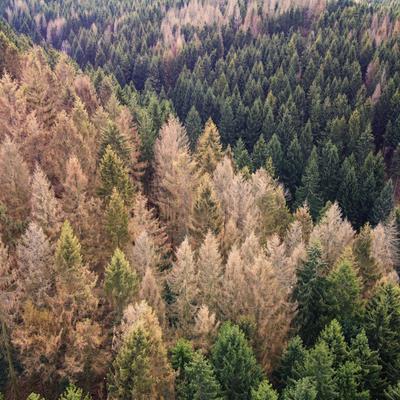
The central premise is that water limitation—intensified by climate change through increased drought frequency, higher atmospheric demand, and altered precipitation regimes—has become a unifying driver shaping forest structure, function, and persistence across biomes. Rather than emphasizing single traits or simplified functional classifications, the Topic adopts a trait-based and mechanistic perspective, highlighting coordinated suites of functional and hydraulic traits that underpin diverse drought-response strategies within and across forest ecosystems.
The scope is intentionally broad and integrative, encouraging cross-biome and cross-scale contributions from seasonally dry tropical forests, Mediterranean systems, and temperate or subtropical forests, including those developing on shallow, rocky, karstic, or otherwise water-limited substrates. These systems offer valuable natural laboratories for advancing our understanding of plant–soil–water interactions under global change. Contributions would span empirical, experimental, and modeling approaches, and explicitly promote dialogue among ecophysiologists, functional ecologists, hydrologists, soil scientists, and forest managers.
A key objective of the Research Topic is to bridge fundamental science with applied perspectives. By integrating functional and hydraulic frameworks, the collection aims to contribute to a more predictive understanding of forest vulnerability and resilience, with direct implications for restoration, species selection, and adaptive forest management under climate uncertainty.
We welcome contributions, including original research, reviews, data reports, perspectives, policy and reviews, that address (but are not limited to):
• coordination and trade-offs among hydraulic and functional traits
• intraspecific variability and plasticity along climatic or edaphic gradients
• plant water-use regulation under drought and heat stress
• ecohydrological coupling between vegetation and subsurface water pools
• consequences of hydraulic strategies for growth, mortality, and recovery.
• Studies addressing drought legacies, extreme events, and long-term shifts in forest composition are particularly encouraged.
This Research Topic accepts the following article types, unless otherwise specified in the Research Topic description:
Articles that are accepted for publication by our external editors following rigorous peer review incur a publishing fee charged to Authors, institutions, or funders.
Keywords: Water-Limited Ecosystems, Trait-Based Functional Ecology, Ecohydrological Coupling, Drought Resilience, Forest Vulnerability.
Important note: All contributions to this Research Topic must be within the scope of the section and journal to which they are submitted, as defined in their mission statements. Frontiers reserves the right to guide an out-of-scope manuscript to a more suitable section or journal at any stage of peer review.
Manuscripts can be submitted to this Research Topic via the main journal or any other participating journal.
Submit your idea
You will be redirected to our submission process.
